Butternut Squash Ravioli

There's something special about a warm, comforting bowl of homemade ravioli on a chilly evening. As a child, I would watch my grandmother roll out the pasta dough, her hands moving deftly as she filled and shaped each delicate pocket. The aroma of simmering broth and the taste of tender, cheesy filling are memories I treasure to this day.
Butternut squash ravioli is a perfect dish for the fall season, when the air is crisp and the squash is at its sweetest. The combination of roasted butternut squash, creamy ricotta cheese, and fragrant sage is a match made in heaven. And the best part? It's easier to make than you think.
In this recipe, we'll walk through the steps to create a delicious and comforting butternut squash ravioli dish from scratch. We'll cover everything from roasting the squash to making the pasta dough, and finally, to assembling and cooking the ravioli.
So, if you're looking for a new recipe to add to your repertoire, or simply want to try something different for a special occasion, this butternut squash ravioli is sure to impress. With its rich flavors and satisfying texture, it's a dish that's sure to become a favorite.
Whether you're a seasoned cook or just starting out, this recipe is perfect for anyone looking to try their hand at making homemade ravioli. The steps are easy to follow, and the ingredients are readily available at most grocery stores. So, let's get started and see how to make this delicious butternut squash ravioli!
Why You’ll Love This Recipe
- This recipe is easy to make and requires minimal special equipment.
- The dish is perfect for a chilly fall or winter evening, and the flavors are rich and comforting.
- Butternut squash ravioli is a great way to get your daily dose of vegetables in a delicious and creative way.
- The recipe can be made ahead of time and refrigerated or frozen for later use.
- The dish is impressive enough to serve at a dinner party, but also simple enough to make for a weeknight meal.
- The combination of roasted butternut squash, creamy ricotta cheese, and fragrant sage is a match made in heaven.
- The recipe is highly customizable, and you can add your own favorite ingredients to the filling or sauce.
Why This Recipe Works
The key to making great ravioli is in the layers of flavor and texture. By roasting the butternut squash, we bring out its natural sweetness and depth of flavor. The ricotta cheese adds a creamy element, while the sage provides a fragrant and herbaceous note. The pasta dough, made with '00' flour and eggs, is tender and delicate, providing a perfect vessel for the filling.
The cooking process is also important. By cooking the ravioli in a large pot of salted water, we create a starchy and flavorful broth that helps to season the pasta. Then, by finishing the ravioli in a pan with some brown butter and sage, we add a rich and nutty element to the dish.
Finally, the resting time is crucial. Allowing the ravioli to rest for a few minutes after cooking helps the filling to set and the pasta to retain its texture. This ensures that the ravioli are tender and delicious, with a filling that's creamy and well-balanced.
By following these steps and using high-quality ingredients, we can create a truly exceptional butternut squash ravioli dish that's sure to impress even the most discerning palates.
Ingredients You’ll Need
To make this delicious butternut squash ravioli, we'll need a few key ingredients. The first is butternut squash, which we'll roast to bring out its natural sweetness. We'll also need some '00' flour, eggs, and ricotta cheese to make the pasta dough and filling. Some grated Parmesan cheese and chopped sage will add flavor and depth to the dish. Finally, we'll need some brown butter and salt to finish the ravioli and bring out their natural flavors.
When shopping for these ingredients, be sure to choose a ripe butternut squash, with a sweet and nutty aroma. The '00' flour should be finely milled and have a soft, powdery texture. The ricotta cheese should be creamy and smooth, with no lumps or bumps. And the sage should be fresh and fragrant, with a delicate, herbaceous flavor.
- 1 large butternut squash (about 2 lbs)Choose a ripe butternut squash with a sweet and nutty aroma. The squash should be heavy for its size and have a hard, smooth skin.
- 2 cups '00' flourThe '00' flour should be finely milled and have a soft, powdery texture. This type of flour is ideal for making pasta dough, as it produces a tender and delicate texture.
- 2 eggsThe eggs should be fresh and have a clean, smooth shell. They will add moisture and richness to the pasta dough, as well as help to bind the ingredients together.
- 1 cup ricotta cheeseThe ricotta cheese should be creamy and smooth, with no lumps or bumps. It will add a rich and creamy element to the filling, and help to balance out the flavors of the dish.
- 1/2 cup grated Parmesan cheeseThe Parmesan cheese should be finely grated and have a nutty, salty flavor. It will add depth and umami to the filling, and help to balance out the sweetness of the squash.
- 2 tbsp chopped fresh sageThe sage should be fresh and fragrant, with a delicate, herbaceous flavor. It will add a fragrant and aromatic element to the filling, and help to balance out the flavors of the dish.
- 1/4 cup brown butterThe brown butter should be nutty and fragrant, with a rich and creamy texture. It will add a rich and nutty element to the sauce, and help to balance out the flavors of the dish.
- Salt, to tasteThe salt should be used sparingly, to bring out the natural flavors of the ingredients. It will help to balance out the sweetness of the squash and the richness of the cheese, and add depth and complexity to the dish.
- 1 tsp black pepper, freshly groundThe black pepper should be freshly ground, with a sharp and pungent flavor. It will add a spicy and aromatic element to the dish, and help to balance out the flavors of the ingredients.
- 1 cup all-purpose flour, for dustingThe all-purpose flour should be used to dust the pasta dough, and help to prevent it from sticking to the surface. It will also help to add texture and structure to the pasta, and make it easier to shape and form the ravioli.

Equipment You’ll Need
How to Make Butternut Squash Ravioli
- 1Preheat the oven to 400°F (200°C). Cut the butternut squash in half lengthwise and scoop out the seeds. Place the squash on a baking sheet, cut side up, and roast for 45 minutes, or until the flesh is tender and caramelized.
- 2While the squash is roasting, make the pasta dough. In a large mixing bowl, combine the '00' flour and eggs. Mix the ingredients together until a dough forms, then knead the dough for 10 minutes, or until it is smooth and elastic.
- 3Wrap the pasta dough in plastic wrap and let it rest for 30 minutes. Then, divide the dough into 4 equal pieces and roll out each piece into a thin sheet, using a pasta machine or a rolling pin.
- 4To make the filling, scoop the roasted squash flesh into a bowl and mash it with a fork. Add the ricotta cheese, Parmesan cheese, chopped sage, salt, and black pepper, and mix the ingredients together until they are well combined.
- 5To assemble the ravioli, place a spoonful of the filling in the center of each pasta sheet. Brush the edges of the pasta with a little water, then fold the pasta over the filling to form a triangle or a square shape. Press the edges together to seal the ravioli, and make sure they are tightly closed.
- 6Bring a large pot of salted water to a boil, and cook the ravioli for 3-5 minutes, or until they float to the surface. Use a slotted spoon to remove the ravioli from the water, and drain off any excess water.
- 7To make the brown butter sauce, melt the butter in a large skillet over medium heat. Cook the butter for 5-7 minutes, or until it is golden brown and fragrant, stirring occasionally.
- 8Add the cooked ravioli to the skillet with the brown butter sauce, and toss them to coat. Season the ravioli with salt and black pepper to taste, and serve them hot, garnished with additional sage and Parmesan cheese if desired.
- 9Let the ravioli rest for a few minutes before serving, to allow the filling to set and the pasta to retain its texture. This will help the ravioli to hold their shape and maintain their delicate flavor and texture.
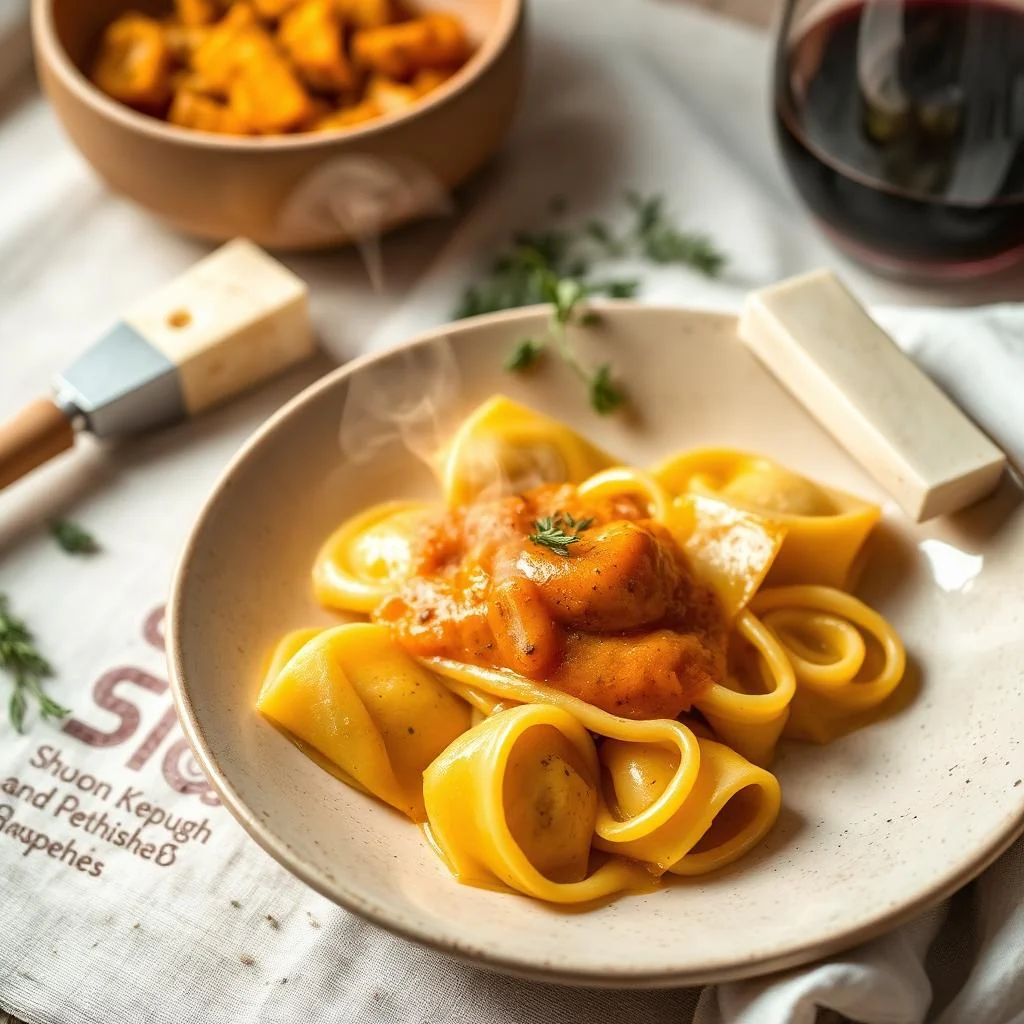
- 10To serve, place the ravioli on a plate or in a bowl, and spoon some of the brown butter sauce over the top. You can also add some grated Parmesan cheese and chopped sage to the dish, for extra flavor and texture.
Expert Tips
- To make the pasta dough more tender and delicate, be sure to knead it for at least 10 minutes, until it is smooth and elastic.
- To prevent the ravioli from sticking together, make sure to dust them with a little flour after assembling them.
- To add extra flavor to the filling, you can also add some grated nutmeg or cinnamon to the mixture.
- To make the brown butter sauce more rich and creamy, you can also add a little heavy cream or grated Parmesan cheese to the skillet.
- To serve the ravioli with a different sauce, you can also try using a tomato sauce or a cream sauce instead of the brown butter sauce.
- To make the ravioli ahead of time, you can assemble them and then freeze them on a baking sheet. Once they are frozen, you can transfer them to a freezer-safe bag or container and store them in the freezer for up to 3 months.
- To cook the ravioli from frozen, simply add them to a pot of boiling salted water and cook for an additional 2-3 minutes, or until they are tender and float to the surface.
- To add some extra texture and flavor to the dish, you can also top the ravioli with some toasted pine nuts or chopped fresh herbs.
Common Mistakes to Avoid
- Not kneading the pasta dough long enough, which can result in a tough and chewy texture.
- Not cooking the ravioli long enough, which can result in a hard and undercooked texture.
- Not using enough flour to dust the pasta dough, which can cause the ravioli to stick together.
- Not sealing the ravioli tightly enough, which can cause them to open up during cooking and lose their filling.
- Not using enough salt in the water, which can result in a bland and unflavored dish.
- Not cooking the brown butter sauce long enough, which can result in a sauce that is not rich and creamy.
Variations and Substitutions
- To add some extra flavor to the filling, you can also add some grated prosciutto or pancetta to the mixture.
- To make the ravioli more colorful, you can also add some chopped spinach or kale to the filling.
- To serve the ravioli with a different sauce, you can also try using a pesto sauce or a arrabbiata sauce instead of the brown butter sauce.
- To make the ravioli more substantial, you can also add some cooked sausage or bacon to the filling.
- To make the ravioli more decadent, you can also add some truffle oil or shaved truffles to the filling.
- To make the ravioli more vegan-friendly, you can also use a tofu or tempeh filling instead of the ricotta cheese.
- To make the ravioli more gluten-free, you can also use a gluten-free flour blend instead of the '00' flour.
What to Serve With Butternut Squash Ravioli
The butternut squash ravioli are best served hot, with a spoonful of the brown butter sauce spooned over the top. You can also add some grated Parmesan cheese and chopped sage to the dish, for extra flavor and texture.
Some other ideas for serving the ravioli include adding some toasted pine nuts or chopped fresh herbs to the top, or serving them with a side of roasted vegetables or a green salad. You can also try serving the ravioli with a different sauce, such as a tomato sauce or a cream sauce.
Make-Ahead, Storage, Freezing and Reheating
The butternut squash ravioli can be stored in the refrigerator for up to 3 days, or frozen for up to 3 months. To freeze the ravioli, simply place them on a baking sheet lined with parchment paper and put them in the freezer. Once they are frozen, you can transfer them to a freezer-safe bag or container and store them in the freezer.
To cook the ravioli from frozen, simply add them to a pot of boiling salted water and cook for an additional 2-3 minutes, or until they are tender and float to the surface.
To reheat the ravioli, you can simply add them to a pot of boiling salted water and cook for 2-3 minutes, or until they are heated through. You can also try reheating the ravioli in the microwave, by placing them in a microwave-safe dish and cooking on high for 20-30 seconds, or until they are heated through.
It's also important to note that the ravioli can be made ahead of time and refrigerated or frozen, which can be a great time-saver during the holidays or other busy times. Simply assemble the ravioli and then refrigerate or freeze them until you're ready to cook them.
Frequently Asked Questions
What type of flour is best for making pasta dough?
The best type of flour for making pasta dough is '00' flour, which is a finely milled flour that produces a tender and delicate texture.
How do I know when the pasta dough is ready?
The pasta dough is ready when it is smooth and elastic, and has a slightly shiny appearance. You can also test the dough by cutting it with a knife - if it cuts cleanly and easily, it is ready.
Can I use a food processor to make the pasta dough?
Yes, you can use a food processor to make the pasta dough. Simply combine the flour and eggs in the processor and mix until a dough forms, then knead the dough for 10 minutes until it is smooth and elastic.
How do I prevent the ravioli from sticking together?
To prevent the ravioli from sticking together, make sure to dust them with a little flour after assembling them. You can also try adding a little cornstarch or semolina to the flour to help absorb any excess moisture.
Can I freeze the ravioli?
Yes, you can freeze the ravioli. Simply place them on a baking sheet lined with parchment paper and put them in the freezer. Once they are frozen, you can transfer them to a freezer-safe bag or container and store them in the freezer for up to 3 months.
How do I cook the ravioli from frozen?
To cook the ravioli from frozen, simply add them to a pot of boiling salted water and cook for an additional 2-3 minutes, or until they are tender and float to the surface.
Can I make the ravioli ahead of time?
Yes, you can make the ravioli ahead of time. Simply assemble the ravioli and then refrigerate or freeze them until you're ready to cook them.
How do I reheat the ravioli?
To reheat the ravioli, you can simply add them to a pot of boiling salted water and cook for 2-3 minutes, or until they are heated through. You can also try reheating the ravioli in the microwave, by placing them in a microwave-safe dish and cooking on high for 20-30 seconds, or until they are heated through.
Ingredients
- 1 large butternut squash (about 2 lbs)
- 2 cups '00' flour
- 2 eggs
- 1 cup ricotta cheese
- 1/2 cup grated Parmesan cheese
- 2 tbsp chopped fresh sage
- 1/4 cup brown butter
- Salt, to taste
- 1 tsp black pepper, freshly ground
- 1 cup all-purpose flour, for dusting
Instructions
- Preheat the oven to 400°F (200°C). Cut the butternut squash in half lengthwise and scoop out the seeds. Place the squash on a baking sheet, cut side up, and roast for 45 minutes, or until the flesh is tender and caramelized.
- While the squash is roasting, make the pasta dough. In a large mixing bowl, combine the '00' flour and eggs. Mix the ingredients together until a dough forms, then knead the dough for 10 minutes, or until it is smooth and elastic.
- Wrap the pasta dough in plastic wrap and let it rest for 30 minutes. Then, divide the dough into 4 equal pieces and roll out each piece into a thin sheet, using a pasta machine or a rolling pin.
- To make the filling, scoop the roasted squash flesh into a bowl and mash it with a fork. Add the ricotta cheese, Parmesan cheese, chopped sage, salt, and black pepper, and mix the ingredients together until they are well combined.
- To assemble the ravioli, place a spoonful of the filling in the center of each pasta sheet. Brush the edges of the pasta with a little water, then fold the pasta over the filling to form a triangle or a square shape. Press the edges together to seal the ravioli, and make sure they are tightly closed.
- Bring a large pot of salted water to a boil, and cook the ravioli for 3-5 minutes, or until they float to the surface. Use a slotted spoon to remove the ravioli from the water, and drain off any excess water.
- To make the brown butter sauce, melt the butter in a large skillet over medium heat. Cook the butter for 5-7 minutes, or until it is golden brown and fragrant, stirring occasionally.
- Add the cooked ravioli to the skillet with the brown butter sauce, and toss them to coat. Season the ravioli with salt and black pepper to taste, and serve them hot, garnished with additional sage and Parmesan cheese if desired.
- Let the ravioli rest for a few minutes before serving, to allow the filling to set and the pasta to retain its texture. This will help the ravioli to hold their shape and maintain their delicate flavor and texture.
- To serve, place the ravioli on a plate or in a bowl, and spoon some of the brown butter sauce over the top. You can also add some grated Parmesan cheese and chopped sage to the dish, for extra flavor and texture.